
the spotify wrapped book tag: 2025 edition | yapping about music & books

Hello again, dear friends! I hope you are all well, and if you aren’t then I hope brighter days head your way soon! It’s that time of year again, friends. You know what I’m talking about, 🎶it’s the most wonderful time of the year🎶: it’s Spotify Wrapped season! As a girly who is both a musician and a nosy bitch, I love this time of year and seeing everyone’s Spotify/Apple Music/[Insert Music Streaming App of Your Choice Here] Wrapped being shared!
Personally, my original playlists are like my diary and sharing them and/or the songs I’ve played most in a year is like bearing my soul to the entire world. But I do it anyway, because who else if not I?

Anyhoo, I was pleasantly reminded that a “Spotify Wrapped Book Tag” exists when I saw that Dini had taken part in the tag this year. And of course I knew I had to participate in the fun yet again! This tag was created by Rosina, and I’ve actually taken part in it before but, seeing as the answers to this tag typically change by the year, I wanted to do it again (maybe I’ll make this a yearly tradition). The rules are simple: Turn your Spotify Wrapped Top Songs of the year on shuffle and tell us which books you associate with the first five songs that play. It’s such a fun tag, especially for me because I get to yap about two of my most favorite things: reading and music! So, let’s not dillydally any longer, let’s get this show on the road!
my top songs of 2025I’ve been fearing darkness / Not knowing I had to face the ones within / Letting the sun touch my skin in hopes that I’d win / Hands etched with sorrows deeper than the ocean’s depths / History rooted in my people’s death, this breath been / Evolved / Consumed / Swallowed whole / On nights where one moon seems fleeting so / Even seven moons don’t illuminate like my soul / My rage? Spoon feed her, moon eater, truth keeper… / … / Rebirth the moon

I’ve loved this song and it’s lyrics (or rather, the lyrics I can understand) since I first heard it about a year ago, but the song took on a new dimension of meaning for me when I (months after first hearing the song) was doing some research into folktales and mythology from around the world and discovered the meaning of “bakunawa.” I won’t keep y’all in suspense: the “bakunawa” is a creature from Philippine mythology that is also described as “a moon-eating dragon” which causes lunar eclipses by swallowing the moon. In several myths from various indigenous Philippine peoples, the bakunawa is said to have swallowed six of the seven moons created by a deity, and thus people had to protect the remaining moon from being swallowed whole by the bakunawa by going out and banging and clanging gongs and pots and pans during the night of a lunar eclipse. Isn’t that so cool?! What a wonderous tale! Even as I’m getting a bachelors in anthropology with a minor/special focus on folktales and mythology from around the world, I’ve had yet to really encounter and dig into Phillipine mythology, so when I came across the stories of the bakunawa, I was so fascinated and entranced—and I was also excited that I had a better understanding of the themes of “Bakunawa” by Ruby Ibarra, as I already really loved and connected to the song!
The way I interpret the lyrics of “Bakunawa”, the speaker (Ruby) was afraid of the “darkness” within her, in part because that darkness was so entangled with generational sorrow and rage from the colonization (or “death”) of her people, but when she faced the darkness inside her she had to journey through that sorrow and rage until she could finally find the light within her (a.k.a she could “rebirth the moon”). I think the song is a really powerful message about the generational trauma that people of color have to deal with and about how to finally confront the darkness, sorrow, and rage that such generational trauma can create in oneself. I really relate to the lyrics, and hey, it doesn’t hurt that they’re set to a really amazing tune and beat.
As for the book I most associate “Bakunawa” with, I actually have chosen a book by a Filipina author which is set in a fantasy world inspired by the Philippines—The Hurricane Wars by Thea Guanzon. I chose this book not simply because of the obvious relation to the Philippines, but also because this book has a lot of imagery that’s similar to the imagery in the song “Bakunawa”. Both the song and the book have a lot of imagery about light and dark—both in the literal sense and in the metaphorical sense. Also, similar to “Bakunawa”, The Hurricane Wars also deals heavily with the topic of colonization. Altogether, I feel like The Hurricane Wars is a very appropriate match with “Bakunawa”.
“brazil” by declan mckennaI heard you sold the Amazon / to show the country that you’re from / Is where the world should want to be / For a fine something all people need / I’m faithless now / Though we win every time and I don’t know how / Cause I haven’t bought you and I haven’t sold me / But the people are dying to, to get on TV / I heard he lives down a river somewhere / With six cars and a grizzly bear / He got eyes, but he can’t see / Well, he talks like an angel, but he looks like me
I first heard this song on TikTok in association with the Amazon Prime adaptation of Jenny Han’s The Summer I Turned Pretty, and, like I think many people, my first impression was that it’s a fun, light, carefree summertime single. Then I actually listened to the words and was blown away by the type of song McKenna had penned. Fun fact about this song that I think a lot of modern-day listeners don’t realize: “Brazil” is actually a protest song which is aimed at the 2014 FIFA World Cup that took place in Brazil and which is about poverty and how politicians and the ultra-wealthy exploit the poor while attempting to cover up their actions and the consequences of those actions. Sooooo…yeah…turns out it’s actually not a “fun, light, carefree summertime song.” I admire the way McKenna wrote the lyrics and composed the song, though, because the music he set the lyrics to is infectiously catchy and makes you instantly want to sing along. It’s a good strategy to get the message of the song into a lot of people’s ears.
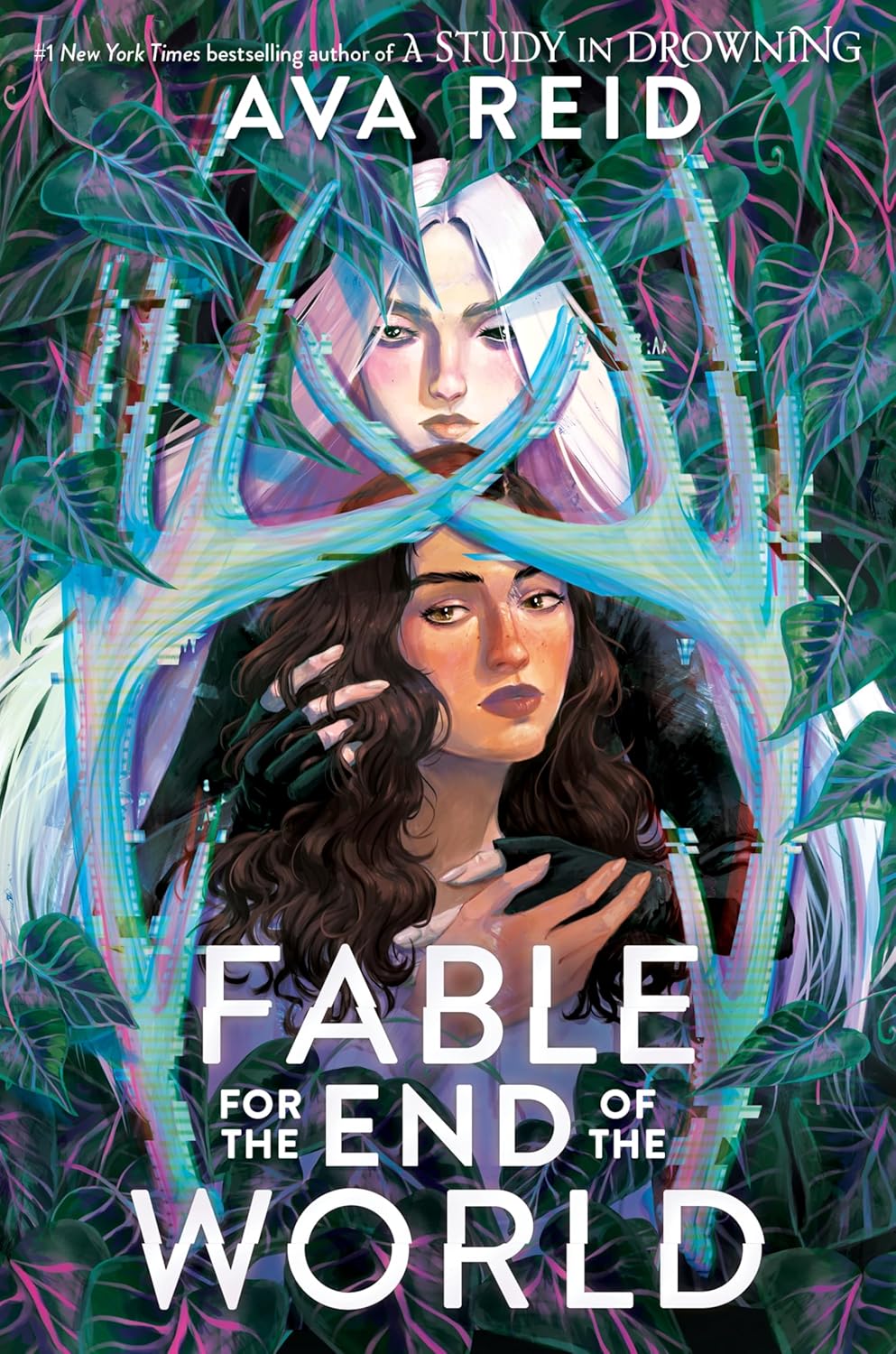
Anyhow, in terms of books I can associate with this song, I was kinda at a loss at first. There aren’t many novels that I’ve read or know of that address modern day poverty and how the poor are exploited within our current world economy. Then I remembered Fable for the End of the World by Ava Reid, which I’m in the middle of reading and which has a lot of thematic commentary on poverty, eco-classism, and how the poor are exploited for the entertainment of the upper classes of society. I think it’s actually a perfect fit to match with “Brazil”! It’s also funny, because one of the main characters—Melinoe—is a kind of cyborg assassin who is described as looking like an angel but when the other main character—Inesa—first meets Melinoe, Inesa is struck by how Melinoe “looks like [her]” in regards to how she perceives Melinoe’s humanity. So “Brazil” very much fits with Fable for the End of the World thematically overall, but also specifically in the lyric “[they] talk like an angel, but [they look] like me”.
“kollo lena” by zeyneOur eyes reveal a great deal about what dwells within us / We who were raised in the fire / We are the ones who sing and who have a voice / We raise our arms to the sky, we remain…

This is another song that could be categorized as a “protest song” and which also addresses colonization (in this case, the colonization of Palestine by the Zionist entity), but it is also very special and meaningful to me as well, as someone of Lebanese/Levantine Arab descent. The interlude of this song also uses a sample of Mahmoud Darwish’s poem “On This Land,” which has been translated as:
We have on this land all of that which makes life worth living
April’s hesitation
The aroma of bread at dawn
A woman’s beseeching of men
The writings of Aeschylus
Love’s beginning
Moss on a stone
Mothers standing on a flute’s thread
And the invader’s fear of memories
We have on this land that which makes life worth living
I love this song so much. I love the way it talks about the sumud of Palestinians, but it also puts sumud in terms of a beauty of the soul which can never be broken. It’s such a beautiful and deeply moving tribute from Zeyne to her people. Zeyne’s music—especially her songs “kollo lena,” “asli ana,” and “hilwa”—always manages to capture my emotions about my Levantine Arab heritage. Her songs really capture the deep love I have for my people and our culture(s), and how proud I am to be of them, and to remain of them. In a way, I am proud of our peoples—Palestinian, Lebanese, Arabs in general—because it feels like, as our land and cultures have become a kind of “final frontier” in the eyes of the colonizer and the empire, we have been chosen to be the ones who break our chains. We are proud peoples, and we all know so very deeply that our love for our peoples and our cultures and our connection to our homelands are so strong and so deep that we cannot and will not ever be defeated, no matter what happens. And this knowledge and pride give me such a feeling of strength, resilience, and hope that is truly difficult for me to describe in words.
The book I chose to match with “kollo lena” is Spice Road by Maiya Ibrahim, which is a Levantine Arab inspired YA fantasy by a Lebanese Australian author. This book has heavy themes surrounding colonization, prejudice and bigotry, and being a witness/bystander to colonization, all of which it handles with a great amount of nuance while still making the book readable and enjoyable for teens (and readers in general). The book chooses an interesting POV character to follow, in that the main character isn’t from the group of people who are being colonized, and she must learn why their cause is an important one. The main character also isn’t necessarily the most “likable” character, but I do think her perspective is really important in building up the broader themes of Spice Road. All in all, though, Spice Road is a really powerful read that I think matches very well with “kollo lena”.
“true believer” by hayley williamsI’m the one who still loves your ghost / I reanimate your bones / With my belief / I’m the one who still loves your ghost / I reanimate your bones cause I’m a True Believer

Y’all…lissen…there’s a good reason us Black folk been rockin’ with Hayley since day one, and this song is a very good example of why. The number of things Hayley comments on in this song that had me nodding my head and saying “Yep. Period.”…it’s pretty much the entire song. If y’all haven’t taken time to listen to “True Believer” and really take in the lyrics and their meaning, I encourage you to do so expeditiously. As a quick TL;DR, though: basically “True Believer” is a song by Hayley Williams in which she heavily critiques capitalism, White supremacy, and Evangelical Christianity/Christian nationalism, as well as their intersection(s). It’s really difficult for me to get across how important songs with messages like this are, especially coming from White celebrities. When I say it’s important that these messages come from White celebrities, I don’t mean that in the sense that they’re less important or meaningful coming from BIPOC celebrities; I mean it in the sense that I know that White people are far more likely to listen to and give credibility to another White person, as unfortunate as that is. I also think it’s important that other White people witness Hayley Williams and her lyrics, because she’s a good example of what it means to “do the work,” when it comes to dismantling and deconstructing one’s own belief systems and beginning to understand how those belief systems are incredibly destructive of oneself and of others.
I’ve chosen to pair “True Believer” with Blood Over Bright Haven by M.L. Wang. Similar to “True Believer”, Blood Over Bright Haven also deals with the layering and intersecting of different systems of oppression, in particular, religious supremacy, patriarchy, and racial supremacy. Wang has said that she wrote this book in order to get out her anxieties about the current state of the world, but in doing so, I feel she also wrote a deeply impactful, powerful, and important work. While I don’t want to spoil anything, I will say that the theme of atonement for systemic injustice is also a prevalent one in Blood Over Bright Haven. Let’s just say, Blood Over Bright Haven isn’t one of my all-time favorite books for nothing!
“eat your young” by hozierGet some / Pull up the ladder when the flood comes / Throw enough rope until the legs have swung / Seven new ways that you can eat your young / Come and get some / Skinning the children for a war drum / Putting food on the table, selling bombs and guns / It’s quicker and easier to eat your young
Another song that could be categorized as a “protest song”? Shocker (/sarcasm). This song and Hozier’s censored performance of it (among other songs) is so incredible and I love them so much! Part of why I love this song so much involves a bit of my personal history, so I’ll tell you a little story….
In the US, our military is well known for sending military recruiters to high schools with large student populations of kids from impoverished families, many of whom are also BIPOC kids/families. I saw this firsthand growing up at my own high school. At the time I attended it, my high school was one of the top three most ethnically and racially diverse high schools in the US, with large populations of immigrant students from over 75 countries, most of which were countries in the Global South. The vast majority of students at my school (myself included) also qualified as “economically disadvantaged” and impoverished and qualified for and used the school’s free breakfast and free lunch programs. So, I saw firsthand how military recruiters targeted our school and its low-income students on a weekly basis. One to two times a week, military recruiters would come to my school and set up information and recruitment tables in the cafeteria during lunch periods. They’d talk and laugh with students, doing their job of recruiting kids—many of whom were immigrants from the very countries that the US Empire and its agents had systematically destroyed physically, militarily, economically, and politically—and they did it with a smile on their faces, as if it was nothing, as if it was normal to recruit kids whose peoples they had absolutely obliterated to wage war against their own at the hand of the US. And it worked. Because there is no kid who’s gonna fully understand exactly what they’re signing up for and playing into at that age, and because what kid wants to live in poverty and oppression for the rest of their life, feeling like they’ll never have equal opportunity in this country to amount to anything worthwhile?
I say all this to say, I understand intimately what Hozier means when he sings “Putting food on the table, selling bombs and guns. It’s quicker and easier to eat your young.” Empire eats its own, and not even the children are spared. It’s a deeply, purposefully predatory practice, despite the fact that arguably in long run, it’s unsustainable. I can’t tell you the deep rage and sorrow that this entire system and process evoke so deep within me. The only thing I can describe it as is feeling the full weight of all of my ancestors screaming at the bars of the prison that is my rib cage. One day this has to end.
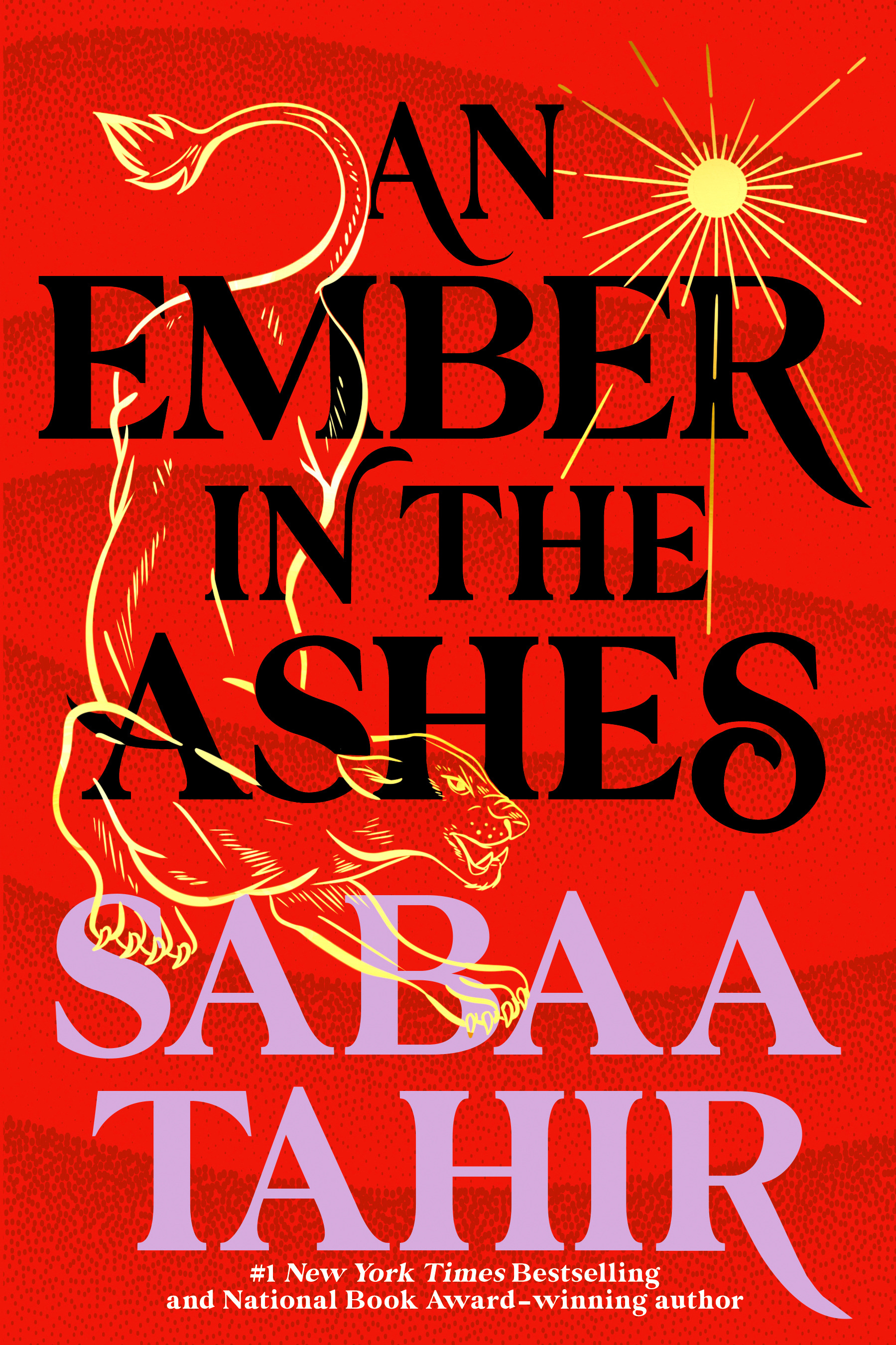
It may seem strange to turn now to books after such a heavy discussion, but I don’t want to derail this post with my in-depth tangential “rants” any more than I already have. So, with that being said, I think the perfect book/book series to pair “Eat Your Young” with is An Ember in the Ashes by Sabaa Tahir. Tahir wrote this book after being a Washington Post correspondent covering US conflicts in the Middle East and South Asia, in places like Afghanistan and Syria. If I remember correctly, she has said that this experience and what she witnessed as a result led her to write An Ember in the Ashes to discuss things like Empire, the military, genocide, and colonization. And, friends, lemme tell ya: she does a damn good job doing just that in this series. This series covers themes such as military indoctrination and what happens when you begin to question it, child soldiering, colonization, genocide, and the expansion of a violent colonial Empire and what must be done to resist and fight back against it. It truly is an amazing series that gets better and better and more complex and meaningful with each book. Definitely go read it—and go watch the TikTok video I linked above of Hozier’s censored “Eat Your Young” performance at Reading Festival 2025, while you’re at it!
spill the beans, friends!What were the top five songs you listened to in 2025? Do you associate any particular books with those songs?
change the world with me!Before anything: FREE PALESTINE!!! 🍉 For over half a century now, the Israeli government has been enacting a genocide against the Palestinian people. This is more than something that started on October 7, 2023. It’s not complicated. It’s genocide. And it’s important that we witness, raise our voices, protest, and fight against it in any way possible. Below are a list of resources to help educate yourself on Palestine, as well as to donate to aid the Palestinian people. In addition, I’ve added some Palestinian influencers and journalists you can follow to learn more from and who keep track of what’s going on. Peace to all and keep fighting the good fight!
education & information resources
donation & aid resources
PALESTINIAN JOURNALISTS & INFLUENCERS TO FOLLOW & AMPLIFY
InfoRMATION & resources
inforMATION & resources
information & resources
- Current Anti Trans Bills Tracker
- ACLU LGBT+ Rights Page (Includes US nationwide map of attacks on LGBT+ rights)
- Black Trans Advocacy Coalition
- The Marsha P. Johsnon Institute
- National Queer API Alliance


what great pairings, the lyrics really match with the vibes of the book. I haven’t read many of these (aside from ember) but I love how you connected it to deeper ideas of the story, such a great post! 💞
Thank you so much! I’m really glad to hear you enjoyed my pairings! I always worry when posting this type of post that involves music, as I know my taste can be pretty eclectic, lol!