
fantasy with friends | realms & religion

fantasy with friends
Fantasy with Friends is a weekly meme created by Pages Unbound. Each week, we discuss a topic centered around fantasy literature. This week’s topic is…
What are some interesting portrayals of religion in fantasy? Do you like seeing invented religions, or do you prefer fantasy worlds to have none?
I’m back on my bullshit, babes—and this time I’m talking religion in fantasy! Maybe it’s the eight years of daily religion classes I had to take, maybe it’s the anthropological training, but I think religion in fantasy stories is an incredibly interesting story element for writers to develop, regardless of whether the religion in question is a real-world religion or completely fictional. Why? Well, lemme start with an anthropological fun fact for you: there is no culture (that we know of)—whether said culture is functionally “extinct” or still exists today—that has ever not had religious beliefs as part of its cultural inception. We can hypothesize that this is because one of the reasons humans create culture is for the purpose of “meaning-making”—a.k.a. to answer questions like “why am I here in this existence/reality?” and “what is the purpose of my life (assuming there is a purpose)?” But, if you are more spiritually or religiously inclined, you might also take this cultural fact as proof that some “greater creator(s)” must exist, since every single one of our ancestors worshipped someone (or more than one someone…s lol), regardless of where said ancestors lived and how disparate and different their various cultures were. That is a claim that I cannot verify, for obvious reasons, it is a question of faith (and who am I to even attempt to entrap and define the unknown and mysterious?), but it is definitely an interesting thought.
Anyhoo, I say all this to say that within the bounds of fantasy novels, I find the inclusion or purposeful exclusion of religion(s) (be it real or fictitious religion(s)) to be a really fascinating and crucial part of world-building—in large part because it helps me understand the cultural context of how the characters understand themselves, their place in their world, and their broader purpose. Plus, I think it can be an interesting window into the author’s personal feelings about those topics as well (which adds another interesting layer of nuance to whatever story they’re telling). Even if the author creates an entirely new, made-up religion for the purposes of the story, I find it fascinating to see how they structure said fictional religion and what type of belief system they design!
fantasy novels featuring real religionsOne of the things I find fascinating about fantasy works featuring real-world religions or semi-fictional religions that are based heavily on real-world religions is how the author chooses to integrate the fantastical elements of the story with real-world religious beliefs. Does the religious group in question believe that the fantastical elements are real, and do they approve of or villainize these elements? Or maybe the religious group will believe that the fantastical elements don’t actually exist and are just fantastical parts of the world’s stories/folktales/myths/etc. Whatever way the author chooses to spin it, I think it can be really interesting and impressive to read! So, let’s check out some fantasy books that show off real-world religions or religious mythology in fantasy settings!
The Daevabad Trilogy and The Adventures of Amina Al Sirafi by Shannon (S.A.) Chakraborty


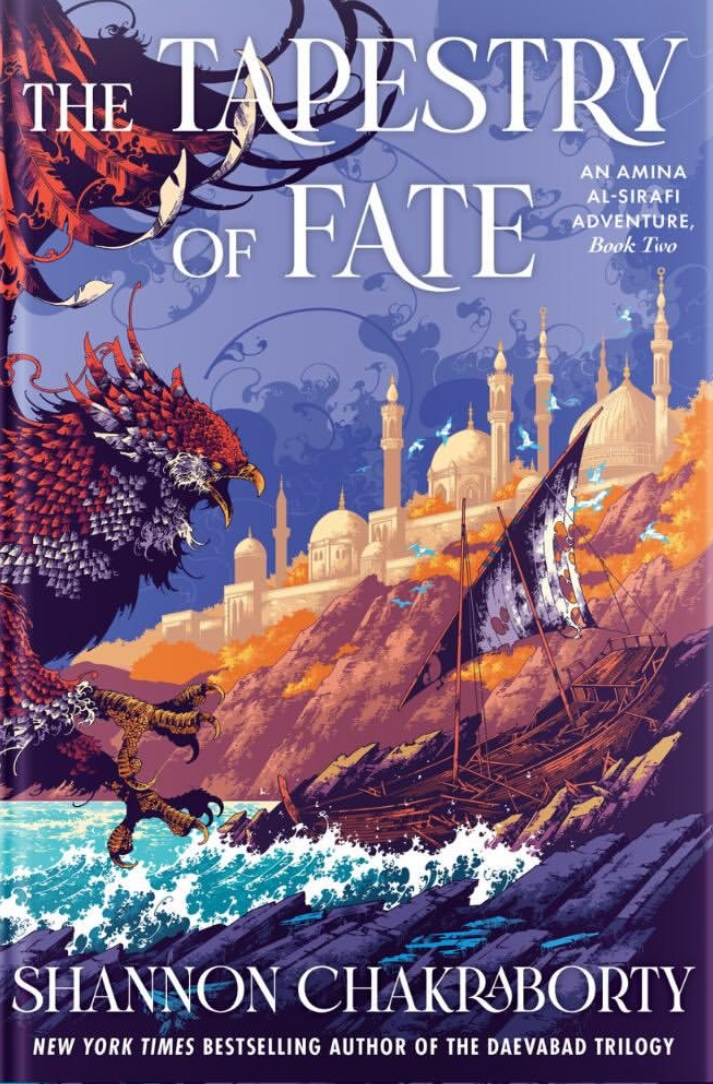
Both of Chakraborty’s series feature explicitly Muslim characters. In fact, in The Daevabad Trilogy, one of the main characters is a devout Muslim whose faith plays a large role in his characterization and role within the narrative. Chakraborty is Muslim herself and actually has a graduate degree in Medieval Islamic History, and I think her books really show off not only her academic knowledge of Islam, but also her own deep love for that community. Chakraborty’s books are set in the SWANA (Southwest Asia & North Africa) region, and as someone who is of that heritage myself, I love how Chakraborty manages to capture the religious diversity of the region and how deeply woven faith is into the very cultural fabric of all of the cultures of SWANA. Chakraborty also does a very nuanced job of showing the diversity of belief and practices within a faith too, showing that one person’s understanding and practice of their faith may not be the same as someone else of the same faith.
The Sixth World by Rebecca Roanhorse


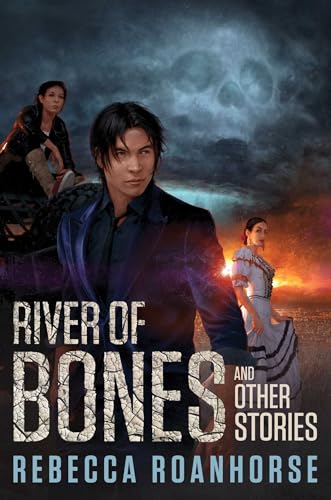
This series by Roanhorse involves a fantasy system/world built around traditional Diné (Navajo) beliefs and mythology. In The Sixth World, Diné mythological figures are very real and play a crucial role in the story. It was very interesting for me, as someone who isn’t Diné, to read this series, because the ways Roanhorse utilized Diné mythology, mythological figures, and traditional beliefs really enhanced the richness of the story and made me so interested to learn more about the actual real-life mythology and belief system!
Aicha by Soraya Bouazzaoui

I recently received an advance ALC copy of the audiobook of Aicha, so it’s my current read and I still have much more to learn about the story and characters. That said, although religion doesn’t seem to be a key component of the story, the narrative makes it clear that Aicha and her family and compatriots are Muslim, and also clearly illustrates how Western colonial powers viewed Islam and Muslims at that point in history. I think this is an interesting choice on the author’s part, as the main plot point of Aicha follows the story of how Aicha becomes a Moroccan warrior goddess incarnate. I don’t believe that the “warrior goddess” in question is a part of Islamic beliefs, so I’m curious to see how Bouazzaoui fits those two beliefs—the mythological and the real religious tradition—together.
The Faithful Dark by Cate Baumer

The Faithful Dark is a recently released Adult fantasy novel featuring an all-queer cast and based largely around a fantasy version of Catholicism, and it’s incredibly high up on my TBR! Because I’m so familiar with Catholic beliefs (I attended Catholic school for eight years), I always find it interesting to see how authors play with such beliefs and traditions. I’m the type of person who doesn’t really get offended easily when it comes to religion and who also can recognize that my own religious denomination has made (and continues to make) many grave mistakes, so I don’t believe that it’s morally wrong/blasphemous for authors to explore our beliefs and traditions and complexities and hypocrisies. I’m also “queer affirming” so I think it’s interesting to use an all-queer cast in a fantasy world based around Catholicism, and to see how that might change the nuances of Catholicism.
Angels by Rafael Nicolas


This is another book series which is really high up on my TBR!* What’s really interesting is that Angels is a queer retelling of Abrahamic mythology. Again, I adore the idea of adding queer characters existing stories/rewriting existing stories to feature queer characters within the context of a religious belief system wherein queerness either doesn’t exist or is frowned upon!
*Also! I wanted to mention that if you’re interested in this book, last I checked, Nicolas has put a download link for the entirety of Angels Before Man in e-book format up on his website and it’s completely free to download!
The Wolf and the Woodsman by Ava Reid

The Wolf and the Woodsman is Reid’s debut novel and is an Adult fantasy novel featuring an ethnoreligious group which is reflective of Reid’s own Jewish heritage and faith. While religion doesn’t play the largest role in the narrative, The Wolf and the Woodsman still depicts what it’s like to be a persecuted ethnoreligious group. I also believe, if I’m not mistaken, that there are pieces of the narrative which are based on Jewish mythology—but I don’t remember 100%, so take that with a grain of salt!
fantasy novels featuring fictional religionsEqually as interesting as integrating a real-world religion into a fantasy world is making up an entirely new, fictional fantasy religion for your story! I actually typically find it even more interesting when an author creates a fictional religion, because it’s so fascinating to see:
- whether or not the author’s new fictional religion is in any way influenced by their own religious beliefs (because most people, be it consciously or subconsciously, tend to write what they know),
- if the author has opted to take elements of different real-life religions and merge them together into something new,
- if the author has just gone with something completely unlike any real-life religion that’s ever existed (and kudos to them if they go down this route, because that’s impressively creative, and arguably nearly impossible to manage!), and
- how any new, fictional religion is reflective of the physical, environmental, intellectual, and emotional realities of the fictional world in which the religion exists and/or said religion shapes the social and cultural structures and realities of the fictional world in which it exists.
So let’s take a look at some interesting examples of fantasy novels featuring completely fictitious religions!
The Eternal Path by Antonia Hodgson

This series is so intriguing in terms of how Hodgson weaves the world’s fictional belief system into the narrative. In the world of The Eternal Path, people practice something akin to animism. There are eight gods, which take the form of animals, and the people dedicated to a particular animal god embody the qualities of that animal. In other words, dedicants of the Raven are typically scholarly, academically inclined intellectuals, dedicants of the Fox are cunning tricksters, dedicants of the Bear are strong protectors, dedicants of the Ox are practical hard-workers, and so on and so forth. In addition, the gods in this universe can exist as omnipotent beings or they can become embodied by a human of their choice.
What I, personally, think is so fascinating about how Hodgson utilizes this fictional religion within the world of The Eternal Path is that she uses the basic belief system I described above as the foundation of multiple different cultural groups in the story. In other words, she builds cultural communities centered around each of the eight animal gods. While all of these communities acknowledge the existence of all of the eight gods, these communities differ in regards to which animal god they dedicate themselves to, which affects the qualities they view as most important and thus how they perceive, understand, and interact with the physical and social world of The Eternal Path.
Blood Over Bright Haven by M.L. Wang

The way in which this powerful, standalone dark academia fantasy interrogates religion and how it can be weaponized in the name of oppression and empire is definitely not for the faint of heart. In Blood Over Bright Haven the society is culturally structured around one religion with two main denominations. Regardless of which denomination a character is a member of, the religion overall is incredibly strict and repressive. We as readers see how the mythology of this fictional religion was created to justify empire, colonization, and the oppression of women and certain racial groups. We also witness how this religion affects every part of life and society—even academic fields which claim to be based on logic and reason rather than faith. I love how Wang uses the depiction of religion in this novel to point out how people can bend and break religious mythology and ideology to fit their own narrative for their own gain.
Between Earth and Sky by Rebecca Roanhorse
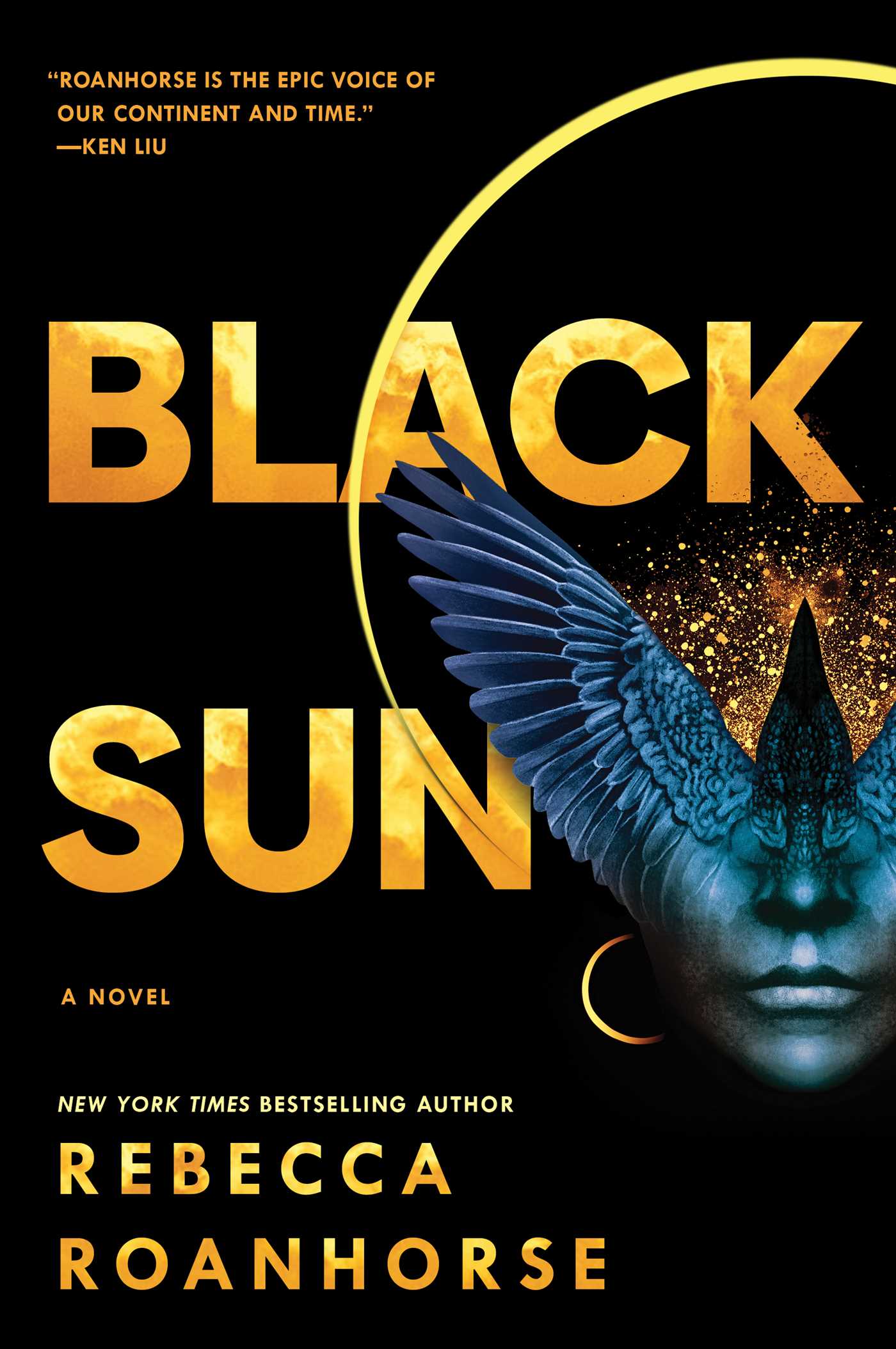


Between Earth and Sky is another interesting series wherein a fictional religion plays a large role in how the world is structured and also in the narrative. In the world of this series, there are several clans in a large city who exist under the “protection” of different gods. A large part of the story involves how two main characters become the avatars of two different gods. As a matter of fact, one of those characters actually begins the story as a high priest. As the world expands out beyond the city, we meet other, new, different ethnic groups which have their own different gods and religious beliefs as well.
The Trident and the Pearl by Sarah S.K. Wilson

The religion in the world of The Trident and the Pearl is kind of your standard fantasy set up with personified gods ruling over the world below, where there are kingdoms with high priests and all that good stuff. The interesting point in this book is that it begins with the main character—the queen of a seaside kingdom—noting that she doesn’t really believe in the gods, despite praying to them. But then something weird happens to our MC. Her prayers are answered…in the worst, most twisted way possible. And then one thing leads to another, and she ends up meeting and teaming up with the god of the sea in human form. So, we see an MC who goes from being highly skeptical about religion to being thrust into the world of the gods that she didn’t even believe existed in the first place.
spill the beans, friends!What are your thoughts on religion in fantasy? Do you think religion is an important world-building element in fantasy books, or do you think it’s unnecessary? Do you prefer to see representations of real-world religions within a fantasy story, or do you prefer to see new, fictional religions depicted in fantasy stories?
change the world with me!Before anything: FREE PALESTINE!!! 🍉 For over half a century now, the Israeli government has been enacting a genocide against the Palestinian people. This is more than something that started on October 7, 2023. It’s not complicated. It’s genocide. And it’s important that we witness, raise our voices, protest, and fight against it in any way possible. Below are a list of resources to help educate yourself on Palestine, as well as to donate to aid the Palestinian people. In addition, I’ve added some Palestinian influencers and journalists you can follow to learn more from and who keep track of what’s going on. Peace to all and keep fighting the good fight!
education & information resources
donation & aid resources
PALESTINIAN JOURNALISTS & INFLUENCERS TO FOLLOW & AMPLIFY
InfoRMATION & resources
inforMATION & resources
information & resources
- Current Anti Trans Bills Tracker
- ACLU LGBT+ Rights Page (Includes US nationwide map of attacks on LGBT+ rights)
- Black Trans Advocacy Coalition
- The Marsha P. Johsnon Institute
- National Queer API Alliance


I love how thoughtful this post is! I agree that I think it’s fascinating to see how religion is depicted in literature because it is such an important part of so many cultures throughout history. A fantasy world that doesn’t have any response to religion, even a negative one, feels a bit underdeveloped in many cases.
I read “a queer retelling of Abrahamic mythology” and that internal voice immediately went, “Whoooooa! …that’s pretty bold”. I’m kind of fascinated by this idea, and so I think I’ll try to get my hands on this Angels series. (The Trident and the Pearl, too. The skeptic forced to confront actual gods sounds interesting as well).
I don’t often read fantasy, although I wish I did. But, I am a huge fan of the Dragon Age video game series and religion has turned out to be pretty integral to the story arc of the series. (It sort of just existed in the periphery in the first game and then became significantly more important as the series progressed, and it added such depth to the world. I friggin’ loved it.) so…I guess what I’m saying is, yes! Gimme religious elements in fantasy!